This Week in St. Petersburg: July 30 - August 4, 2026
Let’s start the third month of summer on a high! On offer this week is a badminton festival, open-air music, intriguing exhibitions, and more.
Researchers from ITMO’s Institute of Design and Urban Studies have created a service that analyzes the shortage or surplus of urban social infrastructure and provides construction proposals based on precise calculations. The service’s main advantage is its efficiency: depending on a city’s size, it takes 5-30 seconds to complete the analysis.
Let’s start the third month of summer on a high! On offer this week is a badminton festival, open-air music, intriguing exhibitions, and more.
Mustafa Haider, a physicist from Pakistan, has overcome his share of hardships throughout his career. First when he managed to enroll at a prestigious university thanks to new admission rules, and then when the world closed down for COVID-19 and his international postdoc turned into isolation with uncertain prospects. Eventually, he found himself in the industry, where research ideas became commercial products. Since then, he has worked in China, where a chance encounter with a Russian professor brought him to St. Petersburg and, more specifically, ITMO, where he is now working on promising solar cells for AI data centers. Read on to learn how to turn a crisis into a springboard, keep your humanity in an increasingly machine-centered world, and fall in love with the metro, where every station is a masterpiece.
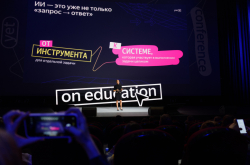
Is AI conscious? Why do we need to study if AI already knows all the answers? Who is the author when an AI helps write a paper? And who is responsible for accidents with driverless cars? These and other questions fall in the realm of AI ethics, an emerging field that aims to make sense of the changing world and highlight the aspects we can’t overlook when adopting new technology. ITMO offers several courses on the subject, spearheaded by Daria Chirva, a member of the National Committee for AI Ethics. We chatted with the expert to find out more about ethical AI.
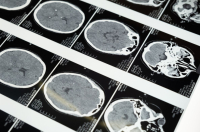
Students of ITMO University’s youth lab Digital Public Health Technologies have created MAS-EHR, a multiagent platform for processing of medical documents. The software can automatically analyze multiformat data – be it texts, scans, or tables – and transform it into a single structured medical record. MAS-EHR extracts diagnoses and test results, converts them into a shared format, detects and deletes personal data, and connects separate facts to demonstrate how different records about the same patient correspond to each other.
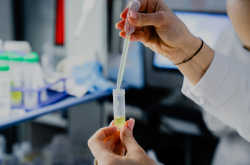
Tiny tech and nano-scale research. Top education for AI pioneers and outer-space communicators. Classic neuroscience experiments to try yourself. All this – in today’s science digest from ITMO NEWS.
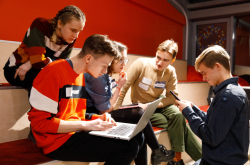
With the exams – and graduation ceremonies – now behind us, students have another month of summer to enjoy, whether that means lazing around or checking off items from your bucket list. But what if you’re struggling to snap out of the post-exam haze of bad sleeping habits and constant stress? We’ve compiled the best activities to partake in and the top ways to shake off the blues this summer season.
ITMO University, the National Medical Research Center of Oncology named after N.N. Petrov, and Yandex Cloud’s Center for Technologies and Society have announced the results of their hackathon in programming, data analysis, and AI in oncology. The proposed solutions will be incorporated into digital services at the National Medical Research Center of Oncology named after N.N. Petrov.
ITMO University has updated its online Master’s program Design and Development of Digital Products by introducing a new training model that will be driven by digital market changes, AI advancements, and a growing demand for specialists who can not only design interfaces but also be an active part of a product team. The program is implemented in partnership with Sberbank, Dodo Pizza, VK, and other major companies in Russia.
For Parmis, her study-abroad experience exists in between two images: one of her family as they wished her best on her travels – and another, a much-anticipated one, of them welcoming her upon return. With that kind of motivation, no hurdle is too hard to overcome. Here's her story.
ITMO University landed among the top three universities in Russia that train top-tier IT specialists in the second wave of the federal project TOP IT (the category PRO). In 2026-2030, the university will receive 196.4 million rubles in grant funding to implement the new educational program titled Software Engineering: AI Development and Deployment. The competition was held by the Ministry of Digital Development, Communications and Mass Media and the Analytical Center for the Government of the Russian Federation.
On June 30, the city’s top university graduates were celebrated during the annual ceremony held at the Peter and Paul Fortress. Among those traditionally awarded with a sphinx statuette – a symbol of wisdom, intelligence, and strength of character – was Alexander Panin, a Master’s graduate of ITMO’s Faculty of Control Systems and Robotics.
Scientists from ITMO’s Faculty of Physics have developed MetaDiT, a generative model for automated design of metasurfaces – superthin optical elements that control light at the nanolevel. The model selects not just the nanostructure’s pattern in an elementary cell but also the key numeric parameters: a metaatom’s thickness, its refraction index, and lattice period – the distance between neighboring elements. With this approach, it’s possible to search for more accurate and versatile designs of flat optics for VR devices, sensors, medical equipment, and photon chips. This project was completed at the joint research center in Qingdao, while the corresponding paper has been accepted to AAAI, one of the leading conferences on AI.
Selectel, Russia’s largest independent IT infrastructure provider, and ITMO University have announced the launch of a joint enterprise for AI services development. Selectel is expected to invest over 1 billion rubles into the project.
The team of ITMO’s Youth Robotics Lab came first in the senior creative category of the Russian Robotics Olympiad in Orenburg. The team presented an autonomous AI-based waste collector robot that can function in natural surroundings. The device can help maintain natural reserves and parks without disturbing their ecosystems.
Svetlana Trusova, a student of ITMO’s Faculty of Applied Informatics, has won the gold at the recent Formula Kite Youth Women’s European Championship and came second in the international ranking. The competition took place on July 2-5 in Gizzeria, Italy.
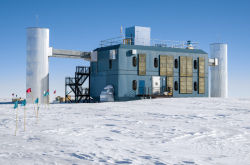
Launched within the Master’s program Advanced Quantum and Nanophotonic Systems, the track will train specialists capable of working with megascience equipment used at major international research centers to solve fundamental and applied tasks. Students in the track will learn the fundamentals of modern particle physics and AI-based data processing and analysis methods, as well as get access to such equipment as the Baikal-GVD neutrino telescope, the NICA collider, the SKIF synchrotron, the HIAF accelerator complex, and others. Read on to learn more about the new opportunity.
The career development platform Changellenge has unveiled its annual Best Company Award ranking, in which students and graduates assess their universities on quality of education, career opportunities, and their readiness to recommend the university to applicants. This year, ITMO topped the ranking, rising by two positions compared to last year. Students also ranked ITMO among the top three choices for Master’s studies.
ITMO University will train engineers and researchers capable of developing photonic chips and optoelectronic devices for AI systems, data centers, and telecommunications. Students of the Integrated Photonics Technologies track will follow the full development cycle of photonic devices: from modeling fundamental processes to working in clean rooms and modern laboratories. Read on to learn more about the program.
Young researchers from ITMO have won 28 grants from the Russian Science Foundation (RSF) in three competitions. As a result, in 2026-2028, the university will receive over 390 million rubles towards independent research projects headed by young researchers, as well as ongoing research. The supported projects focus on physics and metamaterials, AI and mathematical modelling, new functional materials, and quantum physics.
Content © 1993–2026 ITMO University
Development © 2014 ITMO University
General regulations of
Information Use