This Week in St. Petersburg: July 9-15, 2026
Come rain or shine, we are having fun this week! From ITMO’s open-air highlight of the summer to intriguing exhibitions and live performances, the next seven days are packed to the brim.
Svetlana Trusova, a student of ITMO’s Faculty of Applied Informatics, has won the gold at the recent Formula Kite Youth Women’s European Championship and came second in the international ranking. The competition took place on July 2-5 in Gizzeria, Italy.
Come rain or shine, we are having fun this week! From ITMO’s open-air highlight of the summer to intriguing exhibitions and live performances, the next seven days are packed to the brim.
Have pelmeni become too mundane? Are syrniki no longer getting you excited? Today, we've got a selection of iconic dishes from all over Russia that'll delight the most discerning of palates.
The team of ITMO’s Youth Robotics Lab came first in the senior creative category of the Russian Robotics Olympiad in Orenburg. The team presented an autonomous AI-based waste collector robot that can function in natural surroundings. The device can help maintain natural reserves and parks without disturbing their ecosystems.
Selectel, Russia’s largest independent IT infrastructure provider, and ITMO University have announced the launch of a joint enterprise for AI services development. Selectel is expected to invest over 1 billion rubles into the project.
ITMO’s admissions campaign is fully underway!. While international applicants can benefit from the English version of ITMO’s admissions website, learning a few application-related Russian words can help navigate the process. Here’s a quick rundown of the key terms to keep in mind.
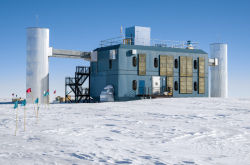
Launched within the Master’s program Advanced Quantum and Nanophotonic Systems, the track will train specialists capable of working with megascience equipment used at major international research centers to solve fundamental and applied tasks. Students in the track will learn the fundamentals of modern particle physics and AI-based data processing and analysis methods, as well as get access to such equipment as the Baikal-GVD neutrino telescope, the NICA collider, the SKIF synchrotron, the HIAF accelerator complex, and others. Read on to learn more about the new opportunity.
The countdown is on for ITMO Family Day – the university’s annual graduation party and open-air festival. From an ITMO-born band to a Russian blink-182, the festival has featured a diverse lineup of artists through the years, with Hleb headlining this year. Scroll down to see who fronted the event before and learn more about this year’s main act.
A Master's student at ITMO’s Faculty of Control Systems and Robotics, Adzembeh Joshua Imoter has worked on everything from mobile-controlled robotic arms to advanced simulation tasks. In this interview, we discuss his academic trajectory, the challenges of bridging knowledge gaps, and why ITMO's research culture has exceeded his expectations.
Scientists from ITMO’s Faculty of Physics have developed MetaDiT, a generative model for automated design of metasurfaces – superthin optical elements that control light at the nanolevel. The model selects not just the nanostructure’s pattern in an elementary cell but also the key numeric parameters: a metaatom’s thickness, its refraction index, and lattice period – the distance between neighboring elements. With this approach, it’s possible to search for more accurate and versatile designs of flat optics for VR devices, sensors, medical equipment, and photon chips. This project was completed at the joint research center in Qingdao, while the corresponding paper has been accepted to AAAI, one of the leading conferences on AI.
On June 20, ITMO University’s Admissions Office opens its doors to applicants. This year, they’ve got plenty of programs and tracks to choose from – along with a new way to enroll for aspiring designers. In this article, we’ve rounded up the key facts: what to choose from, how to make the right choice, keep track of deadlines, and enroll stress-free.
ITMO’s School of Life Sciences is launching a new faculty that will specialize in the engineering of chemical and biological systems and train specialists ready to tackle real-world industrial challenges. The facility will prioritize direct partnerships with industry leaders: from Gazprom Neft and SIBUR to chemical and biological production engineering firms. In this interview, its dean Elena Krivoshapkina speaks in detail about the new faculty, graduates of the future, and how AI is changing chemistry.
Katerina Kukushkina decided to go into science as a child to follow in the footsteps of her grandfather, an aerospace engineer and DSc in engineering, but eventually ended up pursuing a completely different field – chemistry. Over the span of ten years, Katerina studied in Russia, Italy, and France and worked at BIOCAD (a major biotech company in Russia) and several research centers in Spain. However, it was at ITMO that she found all the necessary equipment and specialists for her own project on hybrid nanoparticles for cancer treatment. In this interview, Katerina Kukushkina speaks about the project’s prospects, her work at ITMO, and a career in research.
Urbanomy is the new ITMO-developed software suite that uses AI to predict economic and social effects of urban decisions. The new tool models interests of citizens, investors, and the city, identifies hidden conflicts, and offers balanced area development scenarios. Thus, the tool will be beneficial for authorities, investors, and analysts by allowing them to make economically optimal urban planning decisions. The service has already been tested by the administration of Gatchina in a pilot urban analysis project.
Intelligent robots that interact with the world around them and make decisions don’t seem so fantastical anymore. How many years separate us from humanoid devices and fully autonomous systems? What data should we use to train robotic systems? And where should one study to bring to life the tech described by Azimov and the Strugatsky brothers? All this was discussed at a session of St. Petersburg International Economic Forum (SPIEF) – here are the highlights.
ITMO University’s new Research Office has opened its doors. Here, students and employees can process documents or receive consultations on research-related matters: funding, employment, competitions, contracts, and documentation. Services are available both in-person and online. Learn more about the new office below.
An industrial robot today is an intelligent yet often cumbersome machine that is usually tied to one specific location. Vladislav Gromov and his team, including ITMO PhD students, are training robots to “walk,” “sense” people, and function even without access to the internet. Their next step is to develop a robotic kitchen that will make cooking completely automated – no humans involved. In this interview, Vladislav Gromov shares insights into his project and speaks in detail about challenges scientists face and how other researchers can join his team.
ITMO University landed among the top three universities in Russia that train top-tier IT specialists in the second wave of the federal project TOP IT (the category PRO). In 2026-2030, the university will receive 196.4 million rubles in grant funding to implement the new educational program titled Software Engineering: AI Development and Deployment. The competition was held by the Ministry of Digital Development, Communications and Mass Media and the Analytical Center for the Government of the Russian Federation.
ITMO University is transforming its Faculty of Biotechnologies. Starting from the new academic year, the department will be headed by Elena Koshel, a PhD in biology and author of more than 80 research papers. Her mission is to not only sustain and advance foodtech, but also transform the faculty into a unified ecosystem that performs the full cycle of development – from lab research to market launch. Key strategies for achieving these aims include early integration of students into the industry and creation of joint R&D centers with industrial partners. In this interview, Elena Koshel speaks about why biotechnologists need IT skills, how to unify fragmented laboratories, and what may encourage students to launch startups.
ITMO and MWS AI (part of МТS Web Services) have launched a virtual laboratory where scientists will develop novel methods for accelerating, compressing, and training AI models. The laboratory will help adapt AI into more languages and create new models for speech synthesis and recognition in Arabic and Kazakh, as well as propose algorithms that will optimize performance, reduce resource requirements, and let neural networks run directly on users’ devices to ensure the privacy of their data.
Content © 1993–2026 ITMO University
Development © 2014 ITMO University
General regulations of
Information Use